


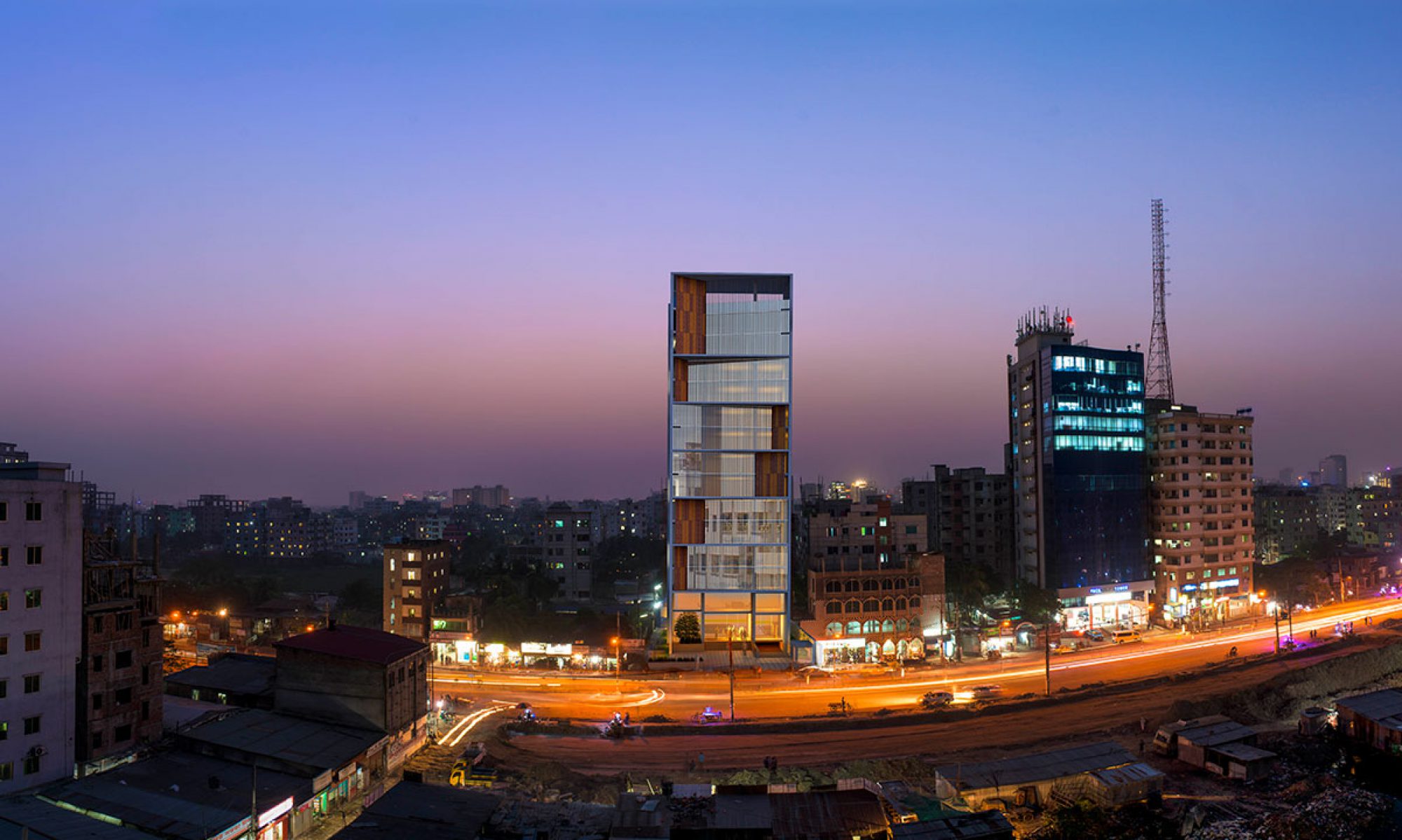
Instead of easing you in, Dhaka will hit you with the density, noise, and unmistakable hunger for vertical space. And somewhere inside all that chaos, money is quietly moving. It slides sideways into concrete, upward into glass facades and outward into planned townships that didn’t exist a decade ago.
The city’s real estate market has held its ground amid currency volatility, surges in construction costs and global headwinds that would have rattled softer markets. Property in high-demand zones like Gulshan and Dhanmondi saw a 15-20% surge in value through 2024-2025 alone. That kind of number can only emerge from a city with over 21 million people and nowhere near enough prime land to go around.
But here’s the part people tend to skip over. Where you invest matters more than what or how much you invest. Not every appreciating neighborhood is a smart bet at every entry point. Some areas have already peaked in terms of accessible returns. Others are only beginning to wake up.
If you’re looking for the ceiling, look at Gulshan. Flats here are currently trading between BDT 15,000 and BDT 36,000 per square foot. That’s not a typo. The embassy presence, the security apparatus, the corporate headquarters, the five-star hotels; all of it compounds into a location premium that doesn’t flinch regardless of what’s happening elsewhere in the economy.
Gulshan-1 and Gulshan-2 each have their own character. North Gulshan commands more than South; a gap that’s been holding for years and shows no sign of closing.
The challenge with Gulshan is exactly what makes it attractive. Entry costs are brutally high here. It’s an area that rewards those who got in early and still rewards those who can afford to get in now, particularly for commercial spaces and long-term rental income. Expecting dramatic capital appreciation from current prices is a different conversation.
Banani sits right next to Gulshan on the map and frankly, in everything else too. Schools, restaurants, corporate offices, security; it checks the same boxes at a marginally lower entry cost, hovering between BDT 15,000 and BDT 19,000 per square foot.
The proximity to the business district makes Banani a consistent performer for rental yield. Professionals, expat tenants and small families keep demand steady regardless of the broader cycle. It’s not as flashy as an investment pitch. It just works, quarter after quarter.
Bashundhara R/A is where serious investors who understand compounding tend to look. Entry prices ranging from BDT 8,000 to BDT 12,000 per square foot put it in a more accessible bracket, but what’s really happening here is a story about infrastructure catch-up.
North South University, IUB, AIUB, and Jamuna Future Park (the largest shopping mall in South Asia) sit right inside this area. Families have been relocating here for years. Road connectivity has improved. The area has a master-planned structure that most of older Dhaka simply doesn’t have.
Bashundhara rewards patience. The investor who buys now and holds for five to seven years is buying into the version of this neighborhood that hasn’t fully arrived yet. That’s usually where the better return lives.
Uttara is divided into numbered sectors. That alone separates it from large portions of Dhaka where organic sprawl has made long-term urban planning nearly impossible. Wide roads, parks, schools, direct access to the airport, and metro rail connectivity have made Uttara one of the most livable planned residential zones in the capital.
Property prices here range from approximately BDT 5,000 to BDT 10,000 per square foot, which remains accessible compared to the Gulshan-Banani belt, which is exactly why middle-income and NRB (Non-Resident Bangladeshi) buyers keep circling back to it. The demand base is broad and real.
For investors considering a diversified Dhaka portfolio, Uttara provides balance: lower entry, steady rental demand, and long-term upside tied directly to metro expansion.
Purbachal is either too early or exactly right, depending on your time horizon. This government-backed satellite city is being developed on a scale that Dhaka’s older neighborhoods physically cannot replicate. Expressway access is real. Development money, both public and private, continues to flow in. Property values have already been climbing at roughly 10% per year in some zones, and that’s before the area is anywhere near complete.
The investors who are winning here are the ones who understand that Purbachal is not a Dhaka-today story. It’s a Dhaka-2030 story. Prices are still in a bracket, starting around BDT 4,500 per square foot. That allows for meaningful appreciation before you’re buying at a premium.
The risk is the timeline. Underdeveloped infrastructure is still a daily reality for residents. But for a pure appreciation play with strong government backing, very few areas in Bangladesh present an equivalent setup right now.
Mirpur gets overlooked in investment conversations because it’s densely populated and not glamorous. Both things are true. What’s also true is that metro rail access has materially changed the commute equation for Mirpur residents, and prices between BDT 5,000 and BDT 10,000 per square foot reflect an area that’s still mid-transition.
Secondary market activity in Mirpur grew 15% in 2024. That’s a strong signal if you are looking to settle in adjacent areas.
Dhaka’s real estate market rewards people who stop waiting for the “perfect entry point” and start making decisions based on real data. The metro rail has already reshuffled the connectivity map. Purbachal and Uttara are being reshaped by government-scale infrastructure investment. Premium zones like Gulshan and Banani are holding their value precisely because land scarcity in those corridors is structural, not cyclical.
Before committing capital anywhere in this market, it helps to see what’s already on the ground, what developers are actually building, where, and at what stage. Reviewing completed and ongoing projects in Dhaka’s key investment zones gives you a grounded view of how supply is actually shaping up across these areas.
The investors who lose in Dhaka’s real estate market usually share one trait. They chased the area’s reputation instead of its fundamentals.
The areas in this piece are worth considering. But worth considering means doing the actual tasks which are walking the streets, verifying developer credibility and understanding the five-year trajectory of the neighborhood, not just the current listing price. The city is loud. The returns are real. The work is yours to do.
215, Bir Uttam Mir Shawkat Sarak Road,
Tejgaon I/A, Dhaka-1208
096 17 123 123(Sales Hotline)
02 88 333 23 (Customer Service)
info@rangsproperties.com
© Copyright 2026 - Rangs Properties Ltd
