Stories
Luxury living in Bangladesh is not for the urban elite anymore. It is expanding alongside the country’s economic growth and rising income levels.
Over the past decade, Bangladesh has maintained an average GDP growth rate of around 6–7% annually, according to the World Bank. This growth has translated into higher household incomes, even in rural areas. As a result, it is increasingly common to see two-storey, well-designed homes with modern amenities even outside major urban centers.
Over the past decade, there has been a noticeable rise in the number of real estate developers and interior design firms across the country.
At the same time, consumer preferences have evolved. Homebuyers today are far more informed and exposed to global design trends through digital platforms. This has led to:
More importantly, there is a clear mindset shift. People are increasingly prioritizing comfort, quality, and long-term living experience over simply minimizing cost.
The evolution of luxury living in Bangladesh is closely tied to the rise of its wealthy population. The country is now ranked among the fastest-growing markets for high-net-worth individuals (HNWIs) globally.
According to The Financial Express, Bangladesh is the 3rd fastest growing HNW (concentration of high net-worth individuals) country! The number of rich people in Bangladesh can rise to 11.4% in five years, according to their findings.
This growth is being fueled by expansion of local businesses, rise of entrepreneurs and SME owners and increasing global income through freelancing and remote work.
As this affluent segment expands, so does the demand for premium housing. These buyers are not just looking for shelter. They are looking for status, comfort, privacy, and modern lifestyle features.
This shift is a key reason why luxury living is no longer niche in Bangladesh. It is becoming a rapidly growing and economically backed housing segment.
Earlier, luxury homes were primarily status symbols. Today, they are also seen as strategic investments. The Business Standard reports that, according to Statista Market Insights, the residential real estate market could grow to $3.53 trillion by 2028. These key shifts include:
So, investing in real estate has become both emotional and financial.
Another major shift shaping luxury living in Bangladesh is the rise of short-term rental platforms and flexible living models like Airbnb. For property owners and developers, this opens up a new opportunity. Luxury homes are no longer just residential assets. They can also function as income-generating properties through short-term rentals.
These platforms have redefined how people experience premium spaces. Instead of owning luxury, many consumers now prefer access over ownership, especially for short stays, travel, or lifestyle experiences.
This trend is now very popular as high-end apartments and furnished homes are designed with hotel-like interiors and amenities, flexible rental arrangements and fully serviced living experiences.
Technology has become one of the most defining features of modern luxury. Smart homes are now an expectation. Features like AI-powered home automation and biometric security systems are becoming standard in high-end properties.
According to industry insights, smart home integration is one of the strongest ongoing trends in luxury housing, shaping buyer expectations globally. Luxury today is as much about intelligence and convenience as it is about design.
Earlier, luxury developments often focused on extravagance. Today, the focus is shifting toward responsible and sustainable living.
Besides, creative architects now introduce the need of energy-efficient buildings, eco-friendly materials and green spaces and natural integration. Modern luxury buyers also feel the necessity of it and act on it.
This shift reflects a broader change in mindset. Wealthy buyers are not just looking for comfort. They are looking for long-term livability and environmental responsibility.
Luxury living has also moved beyond traditional city centers. While prime cities remain important, there is growing demand for resort-style living, waterfront properties and nature-integrated homes.
At the same time, urban luxury has evolved vertically. Iconic high-rise developments now combine residences, hotels, retail and entertainment.
According to global real estate insights, this “lifestyle-integrated living” model is becoming central to modern luxury developments.
The perception of luxury living has changed from status to experience. Once, “luxury” used to mean bigger homes, prime addresses, and visible wealth. Now it means a better lifestyle, smarter living, sustainable choices and personalized experiences.
This transformation is ongoing. As wealth, technology, and consumer expectations continue to reshape; luxury living will keep redefining itself. It won’t be defined by how much you own, but by how well you live.
There’s a moment, right before someone signs a property deal in Bangladesh, where everything goes quiet. Not peaceful quiet; suspicious quiet. Because this market has a memory. It remembers delays. It remembers brochures that promised skylines and delivered concrete boxes with cracked edges.
Still, people buy. They always will. Dhaka expands like it refuses to apologize for itself and the demand keeps chewing through hesitation.
So the companies that survive here aren’t just builders. They’re negotiators with chaos. Here’s where things stand right now.
They don’t try to be loud. That’s the first thing you notice. Rangs Properties moves like a firm that knows its buyers are paying attention. Their projects don’t just sit in premium zones like Baridhara, Banani, and Gulshan; they are even seen in Mirpur, Mohammadpur, Badda, Khilgaon and Lalbagh areas. However, they don’t stretch themselves thin chasing every plot that hits the market.
You can look at Rangs projects and see a pattern which is controlled scale, consistent finishing and a refusal to rush handovers just to tick quarterly targets. That alone separates them from half the field.If you’re trying to figure out how they approach development, you can check out this breakdown of the residential portfolio for a clearer picture. There is not much noise, just execution.
Rancon carries the weight of a larger group and you can feel it in how they operate. Their projects aren’t experiments. They’re extensions of a system that already works elsewhere.
They’ve leaned into high-end residential builds, mostly in Dhaka’s upper-tier neighborhoods. What stands out isn’t just the architecture, it’s the planning discipline. Parking layouts make sense. Common spaces aren’t afterthoughts.
But here’s the quiet critique. They don’t move fast. If you’re the kind of buyer who wants rapid turnover, Rancon will test your patience. Still, patience isn’t always a bad trade in this market.
BTI has been around for so long, they have outlived a lot of brands in Bangladesh. They operate across multiple segments. Apartments, gated communities, even some commercial developments. It gives them range, but it also spreads them thin sometimes.
The strength? Reliability. They deliver. Not perfectly every time, but consistently enough that buyers still circle back. Where things occasionally slip is design ambition. BTI projects can feel safe, functional, but rarely bold.
Then again, in a market where bold often collapses into unfinished promises, safety has its own appeal.
Shanta Holdings is quite picky when it comes to building and they don’t build for everyone. They focus on the high-end segment and don’t pretend otherwise. Premium finishes, branded materials, carefully curated locations. Everything is positioned for a specific buyer. And they deliver on that positioning.
But here’s the thing people don’t say out loud. Exclusivity narrows your margin for error. One misstep in quality or service and the audience notices immediately. So far, Shanta has kept things tight. That’s not easy.
With most of their focus on volume, Rupayan Group plays in a different league. They’ve developed a wide range of projects across Dhaka and beyond, including commercial spaces and land developments. That reach gives them visibility most firms can’t match.
But scale comes with cracks. You’ll hear mixed reviews. Some projects exceed expectations. Others fall short on finishing or timelines. It’s uneven, and that’s the trade-off when expansion moves faster than control. Still, they’re impossible to ignore. The footprint is too large.
Navana carries legacy weight. The brand itself opens doors. Their projects tend to lean toward mid to upper-tier residential developments. They have solid locations, reasonable layouts, and decent construction quality. There has been nothing flashy.
What they do well is consistency in delivery standards. You won’t usually get surprises, good or bad. For some buyers, that predictability is exactly the point. For others, it feels a little restrained.
Asset Developments & Holdings Ltd is not really known for spectacle. They build quietly but strongly. Most of their projects sit in well-planned residential zones and they’ve earned a reputation for timely handovers. That’s not a small thing here.
Their design language leans practical. You won’t find experimental layouts or dramatic architecture. But you also won’t find many structural headaches. It’s a trade many buyers accept without hesitation.
Concord is one of the older names in the game. Experience is just as visible as age. They can and already have handled large-scale development projects, including but not limited to mixed-use and commercial projects. That gives them credibility.
But older firms often struggle with adaptation. Concord has had moments where newer competitors outpaced them in design and finishing standards. Still, their legacy keeps them in the conversation.
Sheltech has been around for decades. That alone tells you something. They’ve built a reputation for reliability and structured project management. Their development projects cover both commercial and residential sectors.
But just like most other long-standing firms, they too are facing pressure from newer players in the market with their aggressive marketing and design. Sheltech holds steady. Not exciting, but steady.
ABC operates with a focused approach. They don’t scatter projects across the city. Instead, they select locations carefully and build within a controlled scope. That discipline reflects in project completion rates.
The downside? Limited portfolio diversity. Buyers don’t get many options, and that can push them elsewhere.
When things don’t go according to plan, it’s mostly related to expectations. Buyers assume brand equals perfection. It doesn’t. Even the best developers here operate inside a system full of friction. That includes regulatory delays. supply chain disruptions, labor inconsistencies and so on.
So the smarter buyers don’t look for perfection. They look for patterns.
Those answers matter more than brochures ever will.
The real estate market in Bangladesh is quite unfiltered. Some companies build reputations brick by brick. Others burn through them just as fast.The names on this list didn’t get here by accident. They’ve absorbed pressure, made mistakes, corrected course, and kept building. And that’s the real currency here. Proof of capability matters more here than any marketing or promises.

If you look at Dhaka city from a bird’s-eye view, only tall, grey skyscrapers will be visible. And you will notice that little room is left for green. In reality, this little green is what really soothes our eyes.
However, a few changes in our landscape architecture can bring a noticeable transformation to this grey scenario.
That is why Rangs Properties Limited (RPL) introduced green fencing – a form of a vertical garden – in their architecture.

This idea is inspired by an article by The World Economic Forum and later RPL team transformed the same into a reality.
“The widely used fencing is usually artificial and made of PVC materials. Using those fences only adds to our financial and environmental loss. As Rangs is a pro-environmental company and against everything that produces plastic waste, we initiated green fencing to rapidly cut down on waste. It is eye-soothing and also reusable,” explained Mashid Rahman, Managing Director of Rangs Properties Limited.
The basic idea was to cover the peripheral fence of a construction site with greenery rather than a dull expanse of metal sheets and PVC. But later, the idea of vertical gardens was developed.

The green fencing stays from the beginning of a project’s construction till its end.
To cover the project fencing and vertical green façade at their construction sites, RPL mostly chose ferns as they repel parasites and require low maintenance.
Later, they added Yellow Monstera and Green Monstera to decorate the vertical walls. These reduce the surrounding temperature and also purify the air.

These plants are kept in rows in geotextile bags which are biodegradable, replaceable and sustainable.
Moreover, they are leakproof so they also do not do harm the walls.
Along with adding natural beauty to the structure, green fencing is also quite cost-effective. Green fence is usually 40 percent less expensive compared to traditional versions.
If there is a small space, RPL plans and designs it in a different way. It creates a little green jungle, planting Terminalia Mantaly, commonly known as Hukachuwa/Nagachuwa.
As part of their landscape architecture, the company has introduced trees on terraces and roofs. To ensure these trees can grow bigger, they are now adding super roofs, using double layers to introduce roof gardens.

As mentioned earlier, these plants do not need much maintenance rather they are quite heat-resistant. So, they help to keep the temperature low which is eventually good for the environment.
“We had a few learning curves which we gradually overcame. We never did anything unsystematically – we started from scratch and went on to learn and imply our lessons. We always prioritised the architectural designs and carefully executed them,” said the MD of RPL.
The first green fencing project began in 2018 at Rangs Z Square in Gulshan Avenue.
Now, more than 30 projects are going on in Dhaka and Chattogram. Green fencing has become an exclusive trade mark of RPL. Even other real estate companies are embracing it.
It blends contemporary architecture with technology driven construction and this is how it creates an exceptional statement.

“We are happy that people are imitating us. We have been a lifestyle brand for people. Our philosophy, designs and aesthetic sense are ahead of time and green fencing is one of our unique ideas. It is great to know that people are welcoming it. When they click pictures and unknowingly promote us, this proves our work as worthy,” said Mashid.
A new dimension in innovation and design excellence has been the core recipe of RPL. It claims that it has created the tallest vertical garden in the city.
In the beginning, it was not easy to introduce a little garden in a landscape but now people are understanding this idea and welcoming its aesthetic sense.
“We do business for man, mankind and the environment. Bringing positivity in life is our philosophy. We want to use more green plants in our architecture. Hence, we are working every day to improve ourselves and will continue doing this in future too, added Mashid.
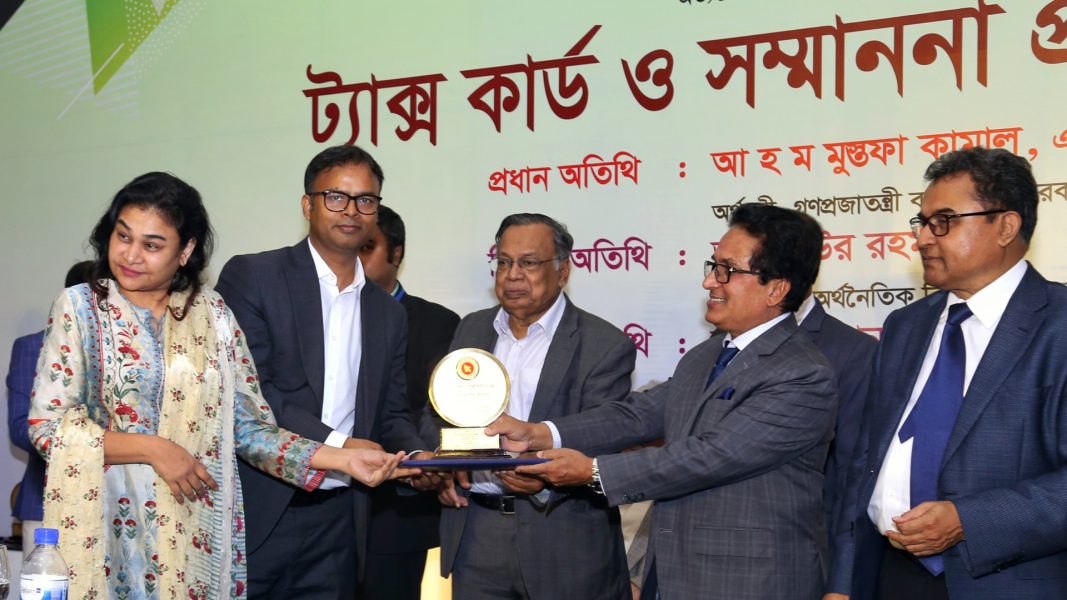
Rangs Properties Limited, one of the leading brands of the country received the ‘Highest Taxpayer’ award in the real estate category for the tax year of 2018-2019 in an event hosted by the National Board of Revenue on November 14, 2019. On behalf of the company, the award was received by Romana Rouf Chowdhury, Director, Rangs Properties Limited and Md. Shahidul Islam, Divisional Director (Sea Resources & Electronics Retail Division), RANCON Holdings Limited. S. Anisur Rahman, General Manager, Taxation, RHL; Md. Iqbal Hossain, Finance Controller & Divisional Head of Finance (RED), RHL; Md. Hasan Parvez Ibne Emdad, COO, Rangs Properties Limited and other senior managers were also present in the ceremony.
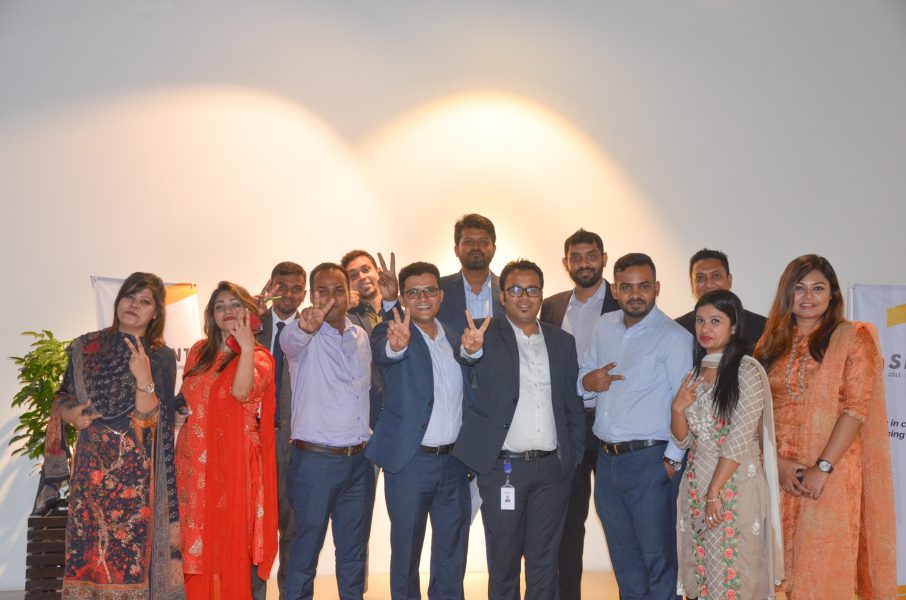
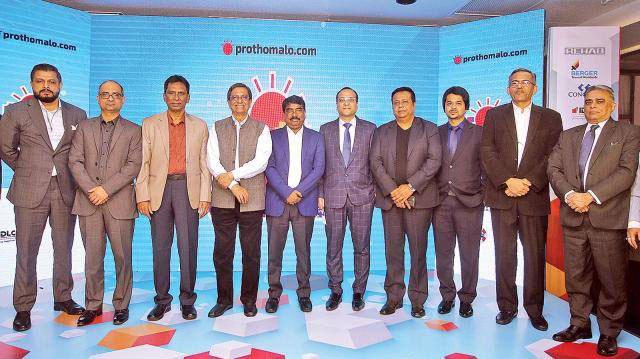
Rangs Properties Limited (RPL) has been working relentlessly to develop projects to offer the best-designed projects. RPL is perusing with the motto of creating lifestyles for each segment of the income group in the city. In the continuity of the motto, RPL is participating in the “Abashon Mela 2019” organized by Prothom Alo. This fair is co-sponsored by RANCON Real Estate Division.
The inauguration ceremony of Abashon Mela 2019 was held at Pan Pacific Sonargaon, Dhaka on 22nd January 2019 where representatives from title sponsor and co-sponsors along with the publisher and Chief Editor of Prothom Alo Mr. Matiur Rahman. On behalf of RANCON Real Estate Division, Divisional Director, Mashid Rahman was present at the ceremony.
The official website of Prothom Alo Abashon Mela is now open for everyone to visit and choose among the assorted residential and commercial spaces based on preference.
The fair will go on till 31st January.
Press Link: bit.ly/2AZjv5k
Website Link: http://bit.ly/2WgMfzb
#rangsproperties#realestate#abashonmela2019#creatinglifestyles



215, Bir Uttam Mir Shawkat Sarak Road,
Tejgaon I/A, Dhaka-1208
096 17 123 123(Sales Hotline)
02 88 333 23 (Customer Service)
info@rangsproperties.com
© Copyright 2026 - Rangs Properties Ltd